3 Decisions That Shape a Successful Service Center
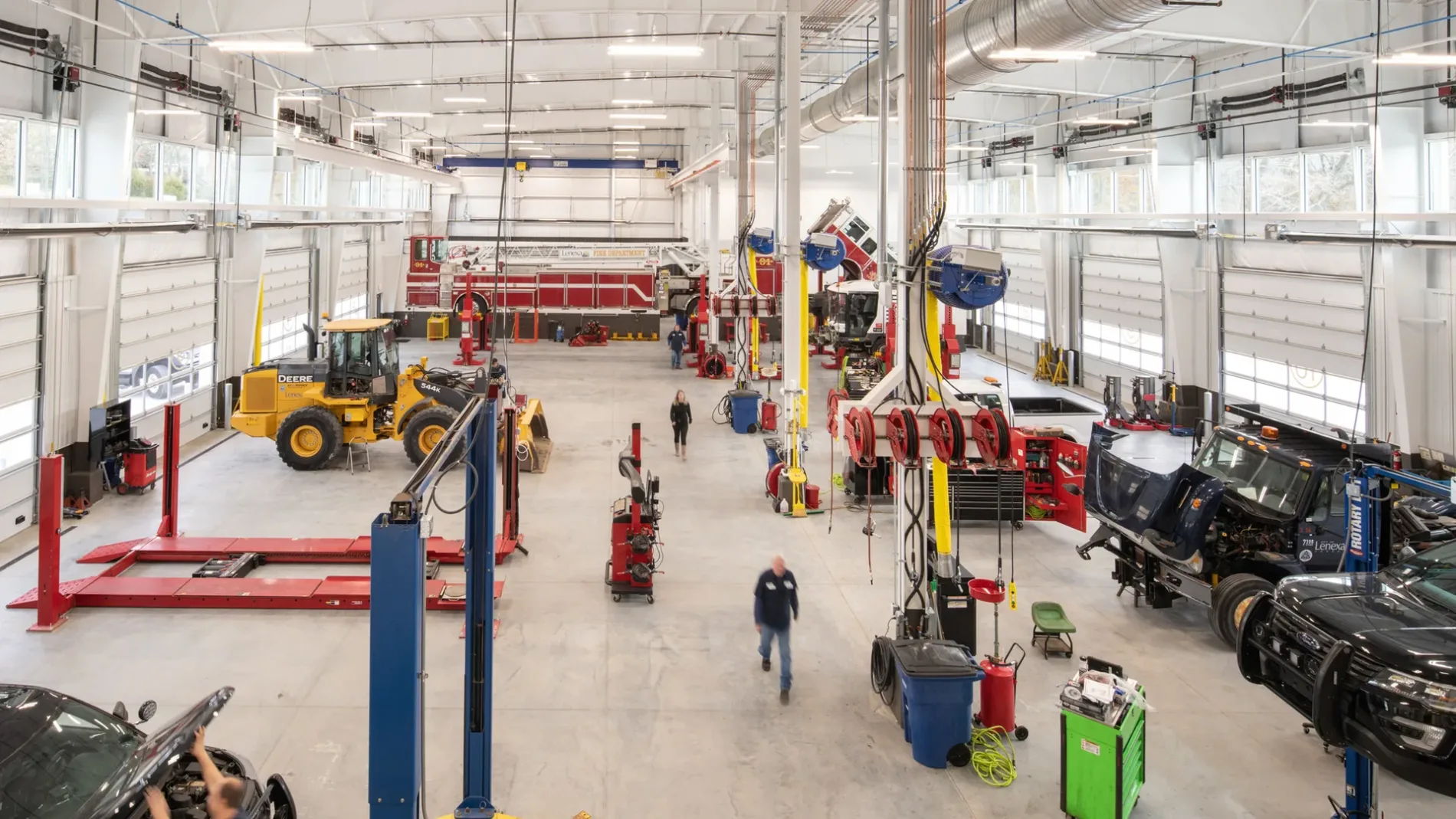
From fleet maintenance and public works operations to facility storage and equipment support, service centers are some of the hardest-working buildings in any community. Unlike traditional office or civic facilities, they must balance durability, functionality, operational efficiency and long-term value while supporting essential services that communities rely on every day. As fleets evolve and technology advances, service centers must also be designed with the flexibility to adapt to changing operational demands.
Whether you’re planning a replacement facility, renovating an existing operations center or developing a new campus from the ground up, several early decisions can significantly influence budget, schedule, operational efficiency and long-term facility performance.
Here are three key considerations owners should evaluate when planning a service center.
1. Define Success Early and Let Operations Drive the Vision
Every successful fleet maintenance facility begins with a clear understanding of what it must achieve. Before discussing floor plans or building materials, owners should define their operational goals — whether that’s improving maintenance efficiency, supporting fleet growth, increasing safety or accommodating future technologies. Establishing these priorities early helps guide smarter decisions throughout planning and design.
With those goals established, the focus should shift to understanding how the facility will function day to day. Evaluating how staff, vehicles, equipment and materials move throughout the site often has a greater impact on long-term success than the building’s appearance alone. Early operational planning helps answer critical questions such as:
- How will vehicles enter, maneuver and exit the site safely?
- Where should maintenance bays, wash bays and storage areas be located?
- Can daily operations continue during future expansions?
- How will the facility accommodate evolving equipment and technology needs?
When operational objectives and facility design are aligned from the outset, service centers become more efficient, safer for employees and better equipped to adapt to future demands. By defining success early and allowing operations to guide key decisions, owners can maximize the long-term value of their investment.
2. Evaluate Structural Systems Through the Lens of Performance, Cost and Longevity
One of the most important decisions during planning is selecting the appropriate structural system. While every project has unique requirements, it is best to evaluate several primary options, including pre-engineered metal buildings (PEMB), structural steel and precast concrete systems.
Rather than asking which system is “best,” the better question is which system best aligns with the project’s goals, budget and operational needs.
Pre-Engineered Metal Buildings (PEMB)
PEMB systems are often considered for service centers because they can provide:
- Competitive initial construction costs
- Faster fabrication and installation schedules
- Large, open floor plans with minimal interior columns
- Flexibility for maintenance bays and equipment storage
However, it is also beneficial to consider the following limitations:
- Architectural customization, making the design more limited compared to other systems
- Long-term expansion requirements should be carefully evaluated during planning
- Additional design coordination due to certain facility uses
Structural Steel
Structural steel remains a popular choice for many municipal and fleet facilities. Advantages of this structural system include:
- Design flexibility and adaptability
- Supporting buildings with more unique shapes, layouts and design requirements than some other structural systems.
- Supports future modifications and expansions
While structural steel offers many advantages, owners should also consider the following:
- Material costs can fluctuate with market conditions
- Longer fabrication timelines may impact schedule
Precast Concrete
Precast systems are frequently selected for facilities where durability and lifecycle performance are priorities. Key benefits of precast concrete include:
- Exceptional durability and resilience
- Reduced long-term maintenance requirements
- Strong thermal and acoustical performance
- Enhanced architectural appearance options
While precast concrete offers significant durability and lifecycle benefits, owners should also consider the following:
- Higher upfront costs compared to some alternatives
- Heavier structural systems may impact foundations and construction logistics
The right solution often comes down to balancing first cost, lifecycle value, schedule requirements and operational priorities. Conducting these evaluations early allows owners to make informed decisions before design progresses too far.
3. Plan for Growth, Flexibility & Site Constraints
Service centers are rarely static facilities. Vehicle fleets evolve, operational needs change, technology advances and communities continue to grow. To support these changes, owners must evaluate both future operational needs and the site’s ability to accommodate them. Factors such as available acreage, utility capacity, drainage requirements, access points and adjacent land uses can significantly influence long-term expansion opportunities and facility performance.
Early planning should consider:
- Future building expansion opportunities
- Additional fleet capacity requirements
- Utility infrastructure sizing, including future EV charging needs
- Changing technology and equipment demands
- Site circulation improvements
- Site constraints that may impact growth, access or development
A facility designed solely for today’s needs may require costly modifications tomorrow. Likewise, a site with limited expansion potential can restrict operational growth and flexibility. By evaluating site constraints early and incorporating strategic flexibility into the planning process, owners can extend the useful life of their facility, reduce future disruptions and protect their long-term investment.
Building for the Long Haul
Service centers may not always be the most visible buildings in a community, but they are often among the most critical. They support the operations that keep cities, school districts and public agencies running every day. By focusing on operational efficiency, carefully evaluating structural systems and planning for future growth, owners can create facilities that deliver value well beyond the day they open their doors.
McCownGordon is a proven service center builder with the expertise to guide informed decision-making, maximize every budget dollar and deliver facilities that fully achieve our clients’ operational goals. Our approach brings operational insight into the conversation early, helping owners evaluate systems and materials while balancing cost, performance and long-term value. When design, construction and operational priorities work together from the beginning, service centers become more than functional facilities. They become long-term investments that support the communities they serve for decades to come.